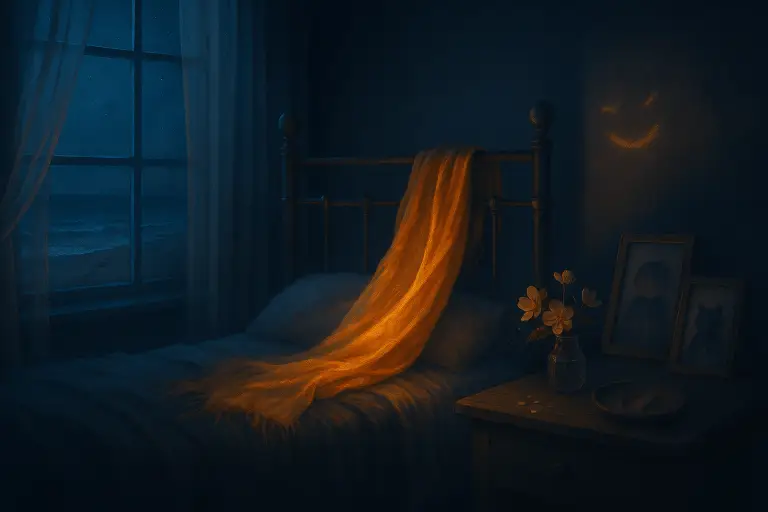
A father protects. In that simple verb lies his meaning.
You learn this not in theory but in the unguarded seconds when a child’s world collides with ours—when raised voices shear the air and small eyes watch, recording more than we intend to show. A twitch of the mouth, the edge of a word, the iron filings of a tone: he absorbs it all. And there I am, reacting—too fast, too loud—offering, by reflex, the very pattern I claim to resist. The paradox stings. The child protests in the only language he owns, and tears translate what vocabulary cannot. We are, for all our self-belief, clumsy creatures; obsessed with defeating our shadows, we step exactly where they fall.
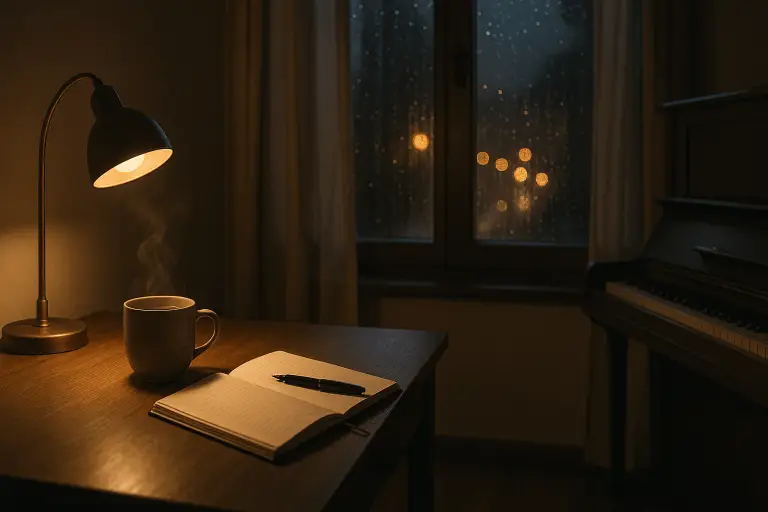
Tonight, in a dark room lit by a faithful machine, I type because I cannot pray and I confess because I cannot sleep. I replay a quarrel with my wife, and the moment my son’s face broke when “Dad reacted to Mom.” Memory chisels quickly; stone knows its sculptor.
Life keeps time with a Newton’s cradle: action invites reaction, again and again, a private perpetuum mobile. The question is not whether the balls will swing, but who will still their motion. Who will break the chain when the slope turns downward? Growth demands such disobedience. Nothing trains us for the small civil war inside—the daily choice to edit our next response—even if the price is steep, even if love must be remade from the ground up.
All of it, all the struggle and restraint, is for a small person learning how to be a large one. May he inherit not my temper but my apology; not my volume but my vow. And if one day he says, “Thank you. I understand. You were firm, strict, but fair,” then let it be known: a father protects—even when the cost is dear.